

- Why UK-Licensed Casinos Do Not Accept Credit Cards
- Payment Methods Used Instead of Credit Cards
- Checking Whether a Payment Method Is Available
- Can a Credit Card Be Used to Gamble Online in the UK?
- Credit Cards and Sites Outside the UK Licensing Framework
- When the Credit-Card Gambling Ban Took Effect
- Deposits, Withdrawals and Processing Times
- Payment Ownership and Transaction Security
- Payment Fees and Currency Conversion
- Playing Online Slots Without a Credit Card
The guide explains the credit-card ban, payment alternatives, availability checks, processing times, ownership and fees.
Why UK-Licensed Casinos Do Not Accept Credit Cards
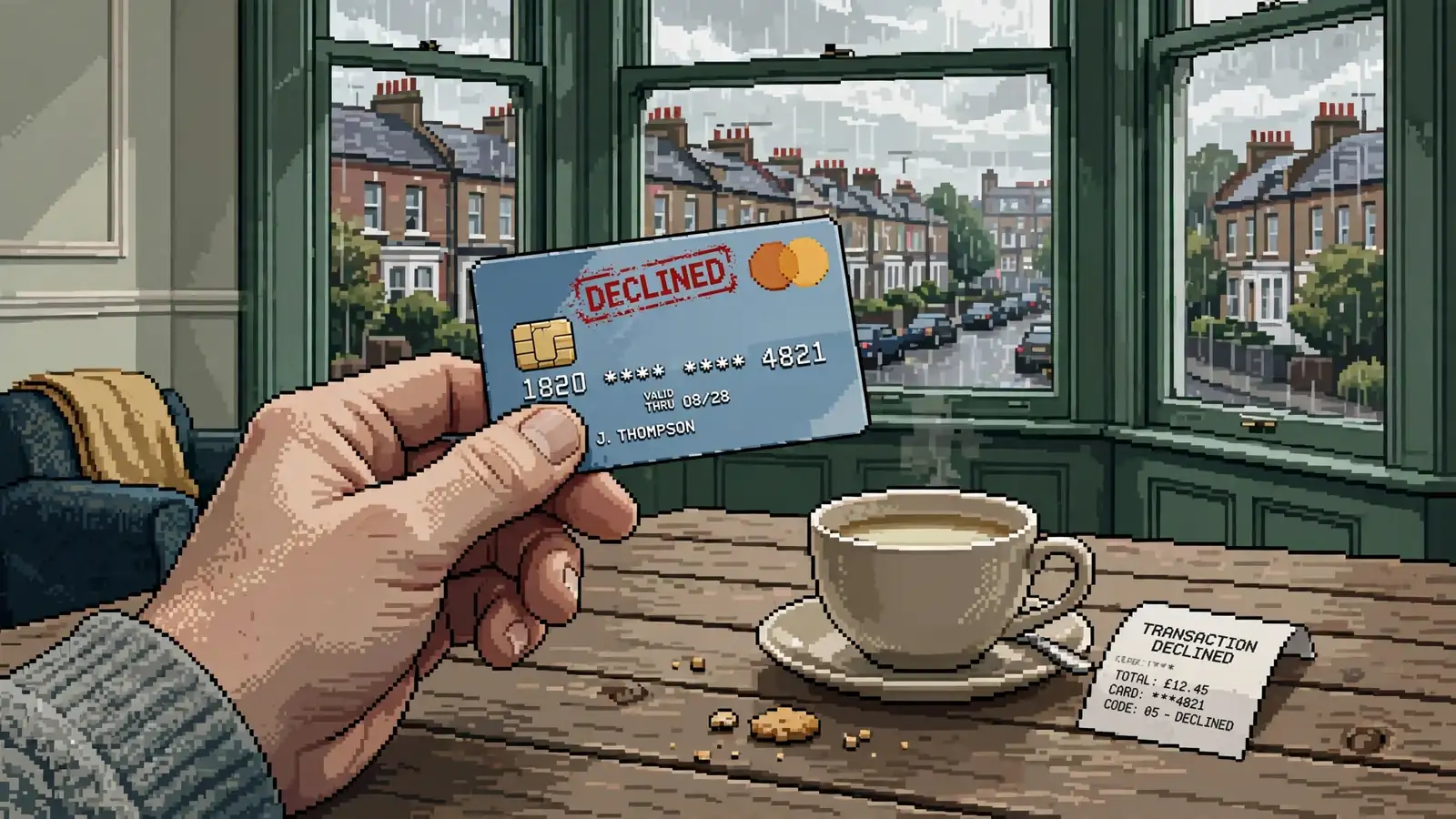
A UK-licensed casino cannot accept a credit-card payment for gambling. This applies to deposits made directly with a card and to arrangements designed to pass credit-card funds through an intermediary. Consequently, there are no lawful UKGC-licensed casino sites that can properly be presented as accepting credit-card deposits in 2026.
The restriction is not a temporary policy adopted by individual operators. It is a requirement applying across the British remote gambling market. The regulator prohibited credit-card gambling on 14 April 2020, and that position has not subsequently been relaxed. A casino that sells real-money gambling to customers in England, Scotland or Wales must therefore operate within rules that exclude credit-card payments for gambling.
That distinction matters because payment terminology can be imprecise. A page may describe a card as a deposit option without explaining whether it is a debit card, a credit card or a product with a different funding arrangement. It may also use broad language about “card casinos” that obscures the relevant difference. The decisive issue is not the word card, but whether the payment draws on credit for the gambling transaction.
The restriction also covers indirect routes. Remote gambling operators cannot accept a wallet payment when that wallet permits credit-card funds to be used for gambling. Moving the money through a payment service does not change the character of the underlying funding. A credit-card casino deposit therefore cannot be made compliant merely by placing an additional account between the card issuer and the casino.
What the licensing framework requires
The Gambling Act 2005 provides the principal framework for gambling in England, Wales and Scotland. Northern Ireland is outside that Act’s scope. For the British market, remote gambling operators selling casino games to consumers must hold the relevant licence from the UK Gambling Commission, regardless of where the business itself is based.
This means that legality and payment acceptance are connected. A casino serving British customers lawfully must hold a current UK Gambling Commission operating licence, and that licensee must follow the prohibition on credit-card payments for gambling. The existence of a website, a registration process or a card logo does not establish that credit-card gambling is permitted.
Casinos That Accept eChecks in the UK
The same framework imposes wider account controls. Before a new customer makes a first deposit, the remote gambling operator must require a financial limit to be set. The account must also contain accessible tools for managing such limits later. UKGC licensees must provide responsible-gambling measures, including self-exclusion, maintain an internal complaints procedure and offer access to an approved Alternative Dispute Resolution service. These obligations form part of the regulated environment in which lawful casino accounts operate; they do not create an exception for credit-card funding.
Age verification is another prerequisite. Operators must establish that a customer is aged 18 or over before allowing funds to be deposited into a gambling account. Legal online gambling in the UK is available to adults of that age only where the operator holds the required UK Gambling Commission licence. A payment method cannot bypass either the age check or the licensing requirement.
Why a list of UK credit-card casinos would be misleading
Searches for the best credit-card casino sites in the UK, casino sites accepting credit-card deposits, or slots that can be funded by credit card may appear to request a comparison. Under the current British rules, however, a list of lawful UK options would be misleading because UKGC-licensed casinos are not permitted to provide the stated payment facility.
The same applies to phrases such as “credit card casinos in the UK” and “UK casinos that accept credit cards”. They can refer to outdated information, unclear descriptions of debit-card payments, or operators outside the UK licensing framework. None of those possibilities turns a prohibited payment into an authorised one.
A further complication arises with references to a credit-card casino “not on GamStop”. GamStop and the UK Gambling Commission licensing system are not interchangeable concepts. A site operating outside the UKGC system is not a UK-licensed casino, even if it is accessible to people in Britain. Offshore casinos operate outside UKGC regulation and do not hold a UKGC licence. They cannot be treated as lawful UK alternatives simply because their websites advertise a payment method that British licensees cannot accept.
UKGC-licensed casinos are prohibited from accepting credit-card payments for gambling, a restriction that has been in place since 14 April 2020.
The absence of a credit-card option does not mean that a casino lacks a lawful way to fund an account. It means that credit is excluded as the funding source. Payment alternatives are a separate question from whether a credit-card deposit is allowed, and the available methods must be considered within the operator’s cashier and licensing conditions. The central position remains unchanged: a British casino with the required local licence cannot accept credit-card payments for gambling, whether the proposed transaction is described as a card deposit, a credit-funded wallet transfer or a casino payment made through another intermediary.
Payment Methods Used Instead of Credit Cards
For British customers, the practical alternatives to credit-card payments are debit cards, electronic wallets, bank-based services and selected prepaid products. The available range is determined by the remote gambling licensee and the payment provider, so no single method can be treated as universal across all licensed casinos.
Payments & Banking: Casino Deposit and Withdrawal Options
Debit cards
Debit cards are the most familiar card-based option. Visa and Mastercard debit cards are commonly accepted by UK casinos, provided the card and account meet the operator’s requirements. A debit card uses money already held in the associated bank account, rather than extending a credit facility. That distinction is central: the presence of a card logo does not make every card eligible for gambling payments.
Debit cards can be relevant for both funding an account and receiving a payout, although the exact route depends on the casino’s cashier and the card issuer. A payment method should therefore be considered an option only where the operator states how it handles both deposits and withdrawals. This avoids treating a deposit facility as though it automatically provides a complete payment route.
E-wallets
E-wallets place a separate payment account between the bank account and the casino. PayPal is one recognised example, while Skrill and Neteller are available at some sites. A specialist affiliate review describes PayPal as valued for convenience and speed, but also notes that a casino’s promotional terms may exclude PayPal deposits from bonus eligibility. That condition is not a universal rule and belongs to the individual offer.
The same type of specialist review reports that Skrill and Neteller may be left outside promotional campaigns. Their presence at a casino does not therefore establish that every welcome offer or deposit promotion applies to them. The payment method and the bonus terms need to be treated as separate parts of the account conditions.
E-wallets can also have their own identity, funding and transaction requirements. The name registered with the wallet should correspond with the gambling account, since mismatched ownership information can create avoidable complications. The wallet’s own funding route matters as well: a wallet must not be used for gambling where it permits a credit-card-funded payment to reach the casino.
Debit Cards
Visa and Mastercard debit cards are commonly accepted, provided they use money held in the associated bank account.
E-wallets
Services like PayPal, Skrill, and Neteller provide a separate account between the bank and the casino.
Bank Transfers
Methods including open banking connect the gambling account directly with a bank account.
Prepaid Options
Products like Paysafecard allow for deposits using prepaid vouchers.
Open banking and bank transfers
Open banking connects the gambling account with a bank account through an authorised payment service. Bank transfer is a more traditional bank-based route. Both methods avoid the need for a card and can be suitable where the casino supports deposits and withdrawals through the same channel.
A specialist affiliate review reports that open banking and bank transfers can produce immediate deposits and comparatively rapid payouts at many sites. That observation is specific to the operators and services examined, rather than a fixed feature of every casino. Bank-based payments can also be affected by the account currency, the banking institution and the operator’s processing arrangements.
Prepaid and mobile-wallet options
Paysafecard is a prepaid voucher designed for deposits only. It can be useful where direct access to a bank card is not wanted, but it should not be presented as a withdrawal method. The deposit-only character makes it different from a debit card or an e-wallet that may support movement of funds in both directions.
Some UKGC-licensed casinos also accept Apple Pay for deposits. Apple Pay is a mobile-wallet layer connected to an eligible underlying card, not an independent source of credit. Its availability and permitted transaction functions depend on the operator, the device and the linked card. A payment through a mobile wallet must still comply with the restriction on credit-card payments for gambling.
The alternatives to credit cards are therefore not interchangeable. Debit cards use existing bank funds; e-wallets hold a separate balance; bank-based services connect directly with a bank account; and Paysafecard is deposit-only. The relevant casino terms determine which of these routes can be used and whether promotional conditions apply.
Casinos That Accept Debit Cards in the UK
Checking Whether a Payment Method Is Available
Payment information on a casino’s landing page is not a substitute for checking the cashier. A payment method may be displayed in general promotional material yet be unavailable for a particular account, transaction, or card product. The cashier is the operational point at which the available routes are shown, together with any conditions attached to them.
This distinction matters when a casino lists Visa or Mastercard. The presence of a familiar card brand does not establish that every card carrying that branding can be used. Current availability and card-product eligibility need to be checked within the account cashier. A card may be issued under a recognised network while still falling outside the products accepted for a particular gambling transaction. The brand name therefore provides only an initial indication, not a final answer.
A specialist review may list Visa and Mastercard among the payment methods associated with the sites it examines. Such a list can help identify which cashier labels may be encountered, but it remains time-sensitive. Payment arrangements can change, and the relevant question is whether the method appears as an available option after the account has been opened and the applicable account details have been entered.
The cashier also clarifies whether a method supports the intended transaction direction. A payment icon alone does not explain whether the route is available for deposits, withdrawals, or both. This distinction is important when comparing card payments with e-wallets, bank-based services, or prepaid products. Availability should be assessed against the specific action shown in the cashier rather than inferred from a logo or a general payment-method page.
Skrill Casino Sites in the UK: Payments and Payouts
Card-product eligibility
The product type attached to a card can affect whether it is recognised by the cashier. Consequently, the result for one Visa or Mastercard product cannot automatically be extended to another. The relevant checks concern the card product presented, the account registered with the casino, and the payment route displayed for that account.
This is also why a payment method shown on a review page may not appear in the cashier. The review may describe the operator’s general payment offering, while the cashier reflects the current configuration for a particular customer and transaction. A specialist affiliate review can therefore be treated as background information about possible options, but not as confirmation that a specific card will be eligible.
The same principle applies to searches for an online casino credit-card deposit in the UK. A payment label cannot by itself establish compatibility, and a card network cannot be treated as a guarantee of acceptance. The cashier remains the relevant place to establish what the account can use.
Account currency
Currency is a separate compatibility issue. Pages examined in a specialist affiliate review state that GBP is supported, but the account currency still needs to be confirmed before the first transaction. Selecting or opening an account in a different currency can introduce conversion even when the payment method itself is available.
The currency shown in the account settings and cashier should therefore correspond with the intended transaction currency wherever possible. The important check is not merely whether pounds appear in a general list, but whether GBP is assigned to the particular account and displayed for the relevant payment flow.
Wirecard at UK Casinos: Is It Still Accepted?
A careful availability check consequently covers three points: whether the method appears in the live cashier, whether the particular card product is eligible, and whether the account currency is suitable. This approach avoids treating an advertised logo or a third-party payment summary as a binding statement about the account’s current options.
Can a Credit Card Be Used to Gamble Online in the UK?
No. A credit card cannot be used to fund gambling at a UK-licensed online casino. This applies whether the payment is intended for casino games, live casino products or online slots. A deposit made directly with a credit card is not an accepted form of gambling payment under the British regulatory framework.
The restriction applies to remote gambling operators serving customers in Great Britain. Such operators must hold the relevant Gambling Commission licence, and those licensees cannot accept credit-card payments for gambling. The position is not based on the individual casino’s preference or on a temporary cashier setting. It is a regulatory requirement.
Credit card and debit card are not the same
The word “card” does not by itself determine whether a payment is permitted. A credit card uses a credit facility provided by the card issuer. A debit card, by contrast, draws on funds held in the linked bank account. That distinction is important when a casino cashier displays card brands or card-related payment options.
Prohibition
A credit card cannot be used to fund gambling at a UK-licensed online casino.
Visa and Mastercard may appear among the payment methods supported by a casino, but the brand alone does not establish that every card carrying it can be used. The product type still matters. A credit version of a card cannot be used for gambling at a UK-licensed casino, while a permitted debit-card route is a different payment category.
The same principle applies when a card is connected to another payment service. A different interface or payment intermediary does not change the nature of funds supplied by a credit card. Remote gambling operators cannot accept credit-card payments for gambling, including credit-card funding routed through a money service business. Wallet payments are also not permitted where the wallet allows credit-card funds to be used for gambling.
What happens when a credit card is selected?
A credit-card deposit should not be treated as an available route merely because a card logo is visible on a website, in a general payment guide or in a list of supported methods. The relevant question is whether the specific payment product can lawfully fund the gambling account. At a UK-licensed operator, the answer for a credit card is no.
A failed or rejected transaction does not create an exception. Nor does changing the wording of the payment route, using a third-party service or attempting to make the deposit through another part of the cashier. The restriction concerns the source and purpose of the payment, not simply the screen used to initiate it.
Casino Sites That Accept Jeton in the UK
This also answers whether a credit card can be used for slots in Britain. It cannot be used to finance slot play at a UK-licensed casino. The payment restriction concerns the funding of gambling rather than a particular casino game, so changing from table games to slots does not alter the result.
The date of the rule
The regulator introduced the ban on credit-card gambling on 14 April 2020. That rule remains in force and has not been relaxed. Consequently, a request to deposit at an online casino with a credit card does not lead to a lawful UK-licensed option. The practical distinction is between a genuine debit-card payment and a credit-funded transaction, rather than between different casino brands or game types.
Top online casinos in the UK
- x3betBonus: Welcome Pack 100% Up to £1.000 + 200 Free Spins · Payout speed: 1-3 business days
- Revery PlayBonus: 100% up to€1,000+ 100 FS · Payout speed: 1-3 business days
- NightLuckBonus: Welcome Pack + 805% Up To 6400€ + 280 FS · Payout speed: 1-3 business days
- DieselwinBonus: Welcome Pack 250% up to £4000 + 200 FS · Payout speed: 1-3 business days
- ChanzeBonus: Slots Welcome Bonus #1 200% up to €500 · Payout speed: 1-3 business days
- SlotoSportBonus: 500% up to £ 10 200+ 777 FS · Payout speed: 1-3 business days
- EvoSpinBonus: 125% up to €2500 + 125 Free Spins · Payout speed: 1-3 business days
- AmunbetBonus: Join now and get 450% up to 2,700 GBP + 450 FS · Payout speed: 1-3 business days
- JetsetspinsBonus: 200% Bonus + 100 Free Spins + Free Royal Wheel · Payout speed: 1-3 business days
- NightWinBonus: £900 + 400 free spins · Payout speed: 1-3 business days
Credit Cards and Sites Outside the UK Licensing Framework
Searches for casinos that accept credit-card deposits often lead to websites presented as offshore, foreign-licensed or “non-GamStop”. These descriptions refer to operators outside the UK Gambling Commission’s licensing system. Their location may be outside Britain, but geographical location does not determine whether a remote gambling licence is required. An operator selling real-money gambling to customers in England, Scotland or Wales must hold the relevant UK Gambling Commission licence.
A site without that licence is outside the UKGC regulatory framework. That distinction matters more than the payment method displayed on its cashier. A credit-card option on an overseas website does not make the arrangement lawful for the British market, nor does a “non-GamStop” label establish that an operator is suitable, authorised or subject to British controls.
UKGC Licensing
The UK Gambling Commission (UKGC) provides the regulatory framework for England, Wales, and Scotland. Licensed operators must follow strict rules regarding age verification, financial limits, and responsible gambling tools, regardless of their physical business location.
The legal position is therefore different from the wording used in promotional pages. Online gambling is legal in the UK only through licensed and regulated sites, and every legal remote casino serving British players must hold a current operating licence. Offshore casinos do not hold a UKGC licence. Advertising offshore or otherwise unlicensed gambling services is restricted to locally licensed operators, so promotional claims should not be treated as evidence of approval.
What the UKGC framework provides
A UKGC-licensed remote gambling operator must verify a customer’s age before allowing a deposit. New customers must also be prompted to set a financial limit before making their first deposit, while account-level limit controls must remain accessible. These requirements place payment activity within a wider system of account safeguards rather than treating the cashier as an isolated facility.
Licensed operators must provide responsible gambling tools, including self-exclusion. They must also maintain an internal complaints process and offer access to an approved Alternative Dispute Resolution service. Operators are required to contribute to the Research, Education and Treatment levy as part of the regulated market.
Those controls do not follow from the presence of Visa, Mastercard, an e-wallet or any other payment logo. They arise from the operator’s UKGC status. A site may advertise familiar banking brands while offering none of the protections attached to a British operating licence.
The phrase “non-GamStop casino” can consequently obscure the central regulatory question. It does not identify a UKGC-licensed casino, and it should not be used as a substitute for checking authorisation. The Gambling Act 2005 governs gambling in England, Wales and Scotland, while Northern Ireland has a separate legal position. For the British market, the relevant test is whether the remote gambling operator holds the required Gambling Commission licence.
Casinos That Accept Citadel in the UK: What’s Confirmed
Credit-card availability on an offshore site also says nothing reliable about dispute handling, account limits, self-exclusion, age checks or access to approved ADR. Nor does it alter the restriction on credit-card payments for gambling within the UK licensing framework. A payment facility and regulatory permission are separate matters: the first describes how money may be presented to an account, while the second determines whether the operator may lawfully offer remote gambling to British customers.
When the Credit-Card Gambling Ban Took Effect
The UK credit-card gambling ban took effect on 14 April 2020. From that date, remote gambling operators could no longer accept credit-card payments for gambling. The restriction applies to deposits made directly with a credit card and also covers credit-card funding routed through a money service business.
The measure remains in force. It was not introduced as a temporary restriction, and the position has not subsequently been relaxed. Consequently, a current UK-licensed casino cannot lawfully treat a credit card as an eligible funding method for a gambling account.
This date is important because older payment information can give a misleading picture of the present position. Material published before 14 April 2020 may describe credit-card deposits as available at particular casinos, but that description does not establish that the same route remains lawful. The relevant question is whether the payment is being made under the current rules, not whether a casino accepted the card before the prohibition began.
UK Casinos That Accept Mastercard: Debit Card Rules
The restriction concerns the source and route of the gambling payment. It is therefore broader than a simple instruction to avoid entering a credit-card number into a cashier. A payment service cannot be used to bypass the rule where the service permits credit-card funds to be used for gambling. The prohibition also prevents a remote gambling operator from accepting credit-card payments through an intermediary money service business.
Accordingly, a casino page that displays a card brand does not, by itself, show that credit-card gambling is permitted. Card networks can support different products, and the legal position depends on the type of funding used and the operator’s compliance controls. The continuing ban means that references to credit-card casino deposits must be assessed against the date of the rule and the status of the operator, rather than treated as evidence of a currently available option.
The rule also explains why searches for casinos accepting credit cards can produce conflicting results. Some pages may be outdated, may describe markets outside the UK licensing framework, or may use “card” as a broad term that includes debit cards. Those categories are not interchangeable. The UK restriction is directed specifically at credit-card payments for gambling, while the fact that another card product is mentioned does not reverse or weaken that prohibition.
EcoPayz Casino Sites in the UK: Check Availability
For a UK-licensed casino, the practical position is therefore settled: credit cards are not an authorised way to fund gambling. The ban’s effective date remains 14 April 2020, and its continuing status is the relevant point when evaluating any claim that a casino accepts credit-card deposits in the UK. A current payment description must be consistent with the operator’s UK Gambling Commission obligations, not merely with an old cashier image or a general statement about card payments.
Deposits, Withdrawals and Processing Times
A deposit and a withdrawal are separate stages of a gambling transaction. A deposit places funds in the casino account; a withdrawal requests that eligible funds leave it. The fact that a deposit is credited promptly does not establish that a payout will be sent at the same speed. Each transaction may pass through different checks and payment channels.
UK anti-money laundering requirements generally support a return of funds to the original payment source. This is often described as a closed-loop approach: the casino first attempts to send the withdrawal back through the route used for the deposit. Where that route cannot receive payouts, an alternative may be offered, but additional checks can then be required before the funds are released.
The time shown for a withdrawal can include more than the delivery stage. It may cover the casino’s internal approval, any KYC review and the payment provider’s processing. A specialist affiliate review reports that first withdrawals can take longer while verification is completed. That observation is dependent on the operator and the account circumstances, so it should not be treated as a fixed timetable for every UK casino.
Withdrawal processing times can vary based on the casino’s internal approval, KYC reviews, and the specific payment provider’s speed.
The payment method can also affect the final delivery stage. A specialist affiliate review places PayPal, open banking services and debit cards connected to fast payout systems among the quicker withdrawal routes. This is a comparative observation rather than a guaranteed service level. Internal approval may still determine when the payment is released, even where the selected provider can process it rapidly.
Bank-based payments may be affected by operational factors after the casino approves a withdrawal. Cut-off times, weekends and currency conversion can influence when a transfer reaches the account, according to a specialist affiliate review. These factors are separate from the casino’s own approval period and can therefore make the overall wait longer than the time stated for internal processing.
The first withdrawal commonly receives closer attention because the operator may need to complete account verification and confirm that the payment route is appropriate. A request can therefore remain pending even when the deposit appeared immediately. The relevant distinction is between the casino accepting a deposit and the casino authorising, sending and completing a payout. A credit-card deposit casino in the UK is not a lawful route for gambling, and payment timing does not alter that position.
Payment Ownership and Transaction Security
Payment ownership is a separate issue from the payment method itself. A transaction can encounter avoidable friction when the account details and the payment route appear to belong to different people. Using account information and a payment source held by the same customer keeps the basic ownership record consistent and reduces the need to resolve discrepancies.
Casinos That Accept UpayCard in the UK
The cleanest arrangement is often a single named account used consistently for both deposits and withdrawals. The name registered on the gambling account should correspond with the name associated with the payment route. Differences in personal details, unexplained third-party funding or changes between payment sources can make the transaction history harder to establish. That does not by itself determine whether a payment is permitted, but it can affect the checks applied to an account.
Returning funds to the original payment source is a common anti-fraud and anti-money-laundering control. It helps establish where deposited funds came from and prevents a payout route from being used to obscure ownership. This principle is relevant when considering a credit card casino in the UK, although credit-card payments for gambling are not accepted by UK-licensed casinos. The question of whether credit cards are allowed at UK online casinos therefore remains distinct from the ownership checks applied to permitted payment methods.
A different withdrawal route may be possible in some circumstances, but it can require additional verification. The operator may need to confirm the relationship between the account holder, the original deposit source and the alternative destination before releasing funds. Such checks are part of transaction security rather than an indication that a payout has been approved.
Consistent records also support a clearer audit trail if a payment is reviewed. The account holder, deposit source and withdrawal destination form a connected chain of information. Where those details align, basic ownership questions are less likely to create unnecessary obstacles. Where they do not align, further documentation or clarification may be required before the transaction can proceed.
Do
- Use a single named account for both deposits and withdrawals
- Ensure the name on the payment source matches the gambling account
Don’t
- Use third-party funding from different owners
- Attempt to use a credit card via an intermediary to bypass rules
Payment Fees and Currency Conversion
The cost of a gambling payment is not necessarily limited to the charge displayed by the casino. A transaction may involve a casino fee, a payment-provider fee, an issuer or bank fee, an exchange-rate spread, and a network fee. Which elements apply depends on the payment route, the account currency and the terms imposed by the businesses involved.
A specialist review identifies these charges as separate possible components rather than one combined payment cost. That distinction matters when comparing card-based alternatives, e-wallets, bank-based services or other payment routes at a UK-licensed casino. A method showing no casino fee may still involve a charge from the provider or a bank. Conversely, a provider’s stated fee may not describe every cost affecting the transaction.
Currency conversion requires particular care. If the gambling account and the funding account use different currencies, the amount exchanged may be affected by the applicable rate and by a conversion spread. A specialist review notes that this spread can cost more than a visible flat fee. The difference may therefore be embedded in the exchange rate rather than presented as a separate line in the payment screen.
There is no universally cheapest payment method. The relevant comparison is transaction-specific: casino charges, provider fees, bank or issuer charges, currency spread and network cost all need to be considered together. A method that appears inexpensive in one currency or for one amount may produce a different total in another situation.
The payment screen and the provider’s terms should therefore be read together, with attention to the currency in which the account is maintained. Any stated fee should be treated as one possible part of the cost, not automatically as the complete price of the transaction. This approach is also relevant when assessing information about casinos described as allowing payment by card: the legal availability of the payment route and its total cost are separate questions.
Playing Online Slots Without a Credit Card
Online slots can be played at a UK-licensed casino without a credit card. The restriction concerns the funding route for the gambling account, not the category of game selected. A debit card, an eligible e-wallet or another payment method shown by the operator may be used where the payment route is permitted and available for the account. A wallet cannot be used for gambling where it allows credit-card funds to be used for that purpose.
The distinction matters because a debit card and a credit card are not treated alike under the UK rules. A card linked to a current account does not become a credit card merely because it carries the Visa or Mastercard name. The decisive issue is how the payment is funded and classified by the issuer and payment provider. UK-licensed remote gambling operators must prevent credit-card payments for gambling, including credit-card funding routed through a money service business.
The slot rules themselves also apply regardless of the funding method. Autoplay is banned for online slots in Britain, so a series of spins cannot be set to run without an individual action for each one. Each spin must last at least 2.5 seconds. These requirements concern how the game operates, rather than how money reaches the gambling account.
Stake limits apply as well. The maximum stake per game cycle is £5 for customers aged 25 and over, while customers aged 18 to 24 are subject to a £2 maximum. The £5 limit for all adults took effect on 9 April 2025. Age verification is required before a customer can deposit funds into a gambling account.
Accordingly, the question of whether slots can be played without a credit card has two separate answers: the funding method must comply with the credit-card restriction, and the slot must operate within the rules for British online play. No credit-card deposit can make an otherwise permitted slot available through a UK-licensed remote gambling operator.
Why must withdrawals return to the deposit method?
Returning funds to the original payment source is a common anti-fraud and anti-money-laundering control. Using a different route may require extra verification.
What is the fastest withdrawal method for UK casinos?
PayPal, open banking services and debit cards linked to fast payout systems are generally among the quickest. The casino’s approval process and your verification status also affect the timing.
Why can a fast payout casino still delay my withdrawal?
A casino must approve the withdrawal, and first payouts may take longer while verification is completed. An unverified account can also slow the process.
Which method has the lowest fees?
There is no universally lowest-fee method. Compare casino and provider charges, any currency-conversion spread, and network costs for the amount you plan to transfer.
Are fast casino withdrawals guaranteed?
No. Withdrawal speed depends on the casino’s approval process and whether your account is fully verified.