

- Finding Dream Catcher in an Online Casino
- Dream Catcher in the Live Casino Context
- Assessing Casinos Offering Dream Catcher
- Live Casino Games and Table-Game Choices
- Playing the Dream Catcher Casino Game
- The Dream Catcher Wheel: What the Evidence Establishes
- Checking a Live Dream Catcher Casino Site
- Demo Access and the Limits of Available Information
- What a Dream Catcher Casino Review Can Verify
- Playing Live: Deposits, Limits and Safer Gambling
Dream Catcher availability is established by an active title listing inside the casino’s own live-game environment.
Finding Dream Catcher in an Online Casino
Dream Catcher is presented in the context of an online casino’s live-game area rather than as a general casino service. For a person looking for this title, the relevant starting point is therefore the operator’s live casino lobby. The lobby is the part of an online casino that groups streamed or live-hosted products separately from other casino content. A title identified as Dream Catcher in that area is the relevant listing; similarly named promotional pages, search results or general casino pages do not by themselves establish that the game is available.
The wording used by operators can vary. A casino may place its live offering under labels such as “Live Casino”, “Live Games” or a comparable menu heading. Dream Catcher may then appear among the available tables or game tiles, subject to the operator’s catalogue and the customer’s location. A direct title search can be useful where the lobby includes a search field, but the result still needs to be opened within the casino’s own environment. A reference on an external page is not the same as an active game listing.
The distinction matters because the phrase “Dream Catcher casino online” can describe several different things. It may refer to an operator that lists the game, a page explaining access to a live casino, or a general article using the title as a keyword. Only the operator’s own live-casino interface indicates that the product is currently included in that operator’s offering. Availability can also depend on whether the account is being accessed from Great Britain and whether the relevant account checks have been completed.
Live Baccarat Online Casinos in the UK: What Listings Show
Establishing that the casino may serve Great Britain
The legal status of the operator should be established before an account is funded or a game is opened. Remote operators serving consumers in Great Britain are required to hold the relevant Gambling Commission licence. This requirement applies to the operator providing the remote gambling service, not merely to a website that mentions Dream Catcher.
The UK Gambling Commission regulates online casinos and remote gambling supplied to Great Britain consumers. Its public register is the appropriate place to check the operator’s licence information. The name shown in the casino’s footer, terms or account area should correspond with the business identified in the register. A domain name can also be relevant, because the licensed business and the website through which the service is offered should be clearly connected.
A casino page carrying a licence logo is not, on its own, sufficient confirmation. The register provides a more direct basis for establishing whether the business holds the required authorisation. The absence of a clear connection between the operator, its domain and the registered business is a reason to stop the verification process rather than assume that a Dream Catcher listing makes the service legitimate.
Locating the live listing
Once the operator’s status has been established, the game can be sought through the casino’s live section. The usual sequence is straightforward:
- Open the casino’s live-casino area.
- Use the title search or browse the listed live products.
- Confirm that the displayed title is Dream Catcher.
- Check that the game opens within the operator’s own account environment.
- Review the information shown before any wager is placed.
This process separates access to a named product from broad claims that an online casino offers every live game. An operator may advertise a wide live-casino range while changing its catalogue, restricting particular products or showing different content to different account holders. The presence of the title should consequently be confirmed at the point of access.
The game should not be confused with unrelated casino pages using similar wording. “Live Dream Catcher online casino” is best understood as a request for a licensed online casino where the title is available in the live lobby. It is not a separate legal category of casino, nor does the wording itself identify a particular operator.
Account access and the game page
Opening a live game generally takes place after the casino has created and checked an account. A remote operator must verify a customer’s age before allowing funds to be deposited into a gambling account. This requirement forms part of the access conditions for real-money online gambling and means that a game listing cannot be treated as unrestricted access.
Do
- Check the operator’s licence on the UK Gambling Commission public register.
- Ensure the casino’s domain and business name match the register.
- Verify that the game opens within the operator’s own account environment.
Don’t
- Assume a game listing makes a service legitimate.
- Rely solely on licence logos appearing on a casino page.
- Treat external references or search results as active game listings.
The game page should be read as an operator-specific information page. It may identify the title, show its current availability and display the controls associated with the account. The account balance and any available wagering options belong to the casino service through which the game is accessed, rather than to the phrase “Dream Catcher online casino” itself.
The same care applies when comparing descriptions of an online casino with Dream Catcher. A label such as “best online casino with Dream Catcher” is not a regulatory classification and does not prove that the operator is licensed or that the title is available at the time of access. The meaningful checks are whether the relevant live listing is present and whether the remote operator serving Great Britain holds the required Gambling Commission licence.
Dream Catcher in the Live Casino Context
The expression “live casino” can describe two related but different things. It may refer to a particular game presented through a live dealer or live studio format. It may also describe the wider casino category containing several live products, often including card games, table games and other casino formats. Dream Catcher belongs in this broader discussion as a named casino product, but the name alone does not establish every detail of its presentation, provider or history.
A live casino game is an individual offering within an operator’s casino catalogue. Its identity depends on the title used by the operator and on the game information displayed on the relevant page. The wider live casino section is the collection in which that title appears alongside other offerings. Therefore, a reference to a live casino does not necessarily identify one particular game, while a reference to Dream Catcher does not by itself describe the entire live-casino range.
Online American Roulette in the UK: Licensing Guide
This distinction matters when interpreting descriptions of a “live Dream Catcher casino”. The phrase can refer to a casino website that makes a Dream Catcher product available within its live section. It can also be used more generally to describe the product’s place among live casino games. Those meanings should not be treated as interchangeable. A casino may offer a broad live category, whereas Dream Catcher is one named product within that category.
Live casino as a product category
Live casino offerings are generally presented as a separate part of an online casino’s overall catalogue. The category can contain several types of game, including card and table formats. A product page may sit within that category even though the surrounding catalogue contains games with very different rules, interfaces and wagering arrangements.
Historical context helps explain how this category developed in the United Kingdom. Grosvenor first unveiled its live casino games in 2013. The launch included a selection of card and casino games, among them Blackjack, Texas Hold’em and Roulette. That event establishes a date for Grosvenor’s introduction of live casino games; it does not establish the launch date of Dream Catcher, nor does it identify the company that created or supplied Dream Catcher.
The distinction between an operator and a game provider is also important. An operator makes gambling products available through its website and account system. A provider develops or supplies a particular product. The presence of a game on an operator’s live-casino page does not, on its own, show that the operator created the game. A reliable description should keep those roles separate unless the relevant product information states otherwise.
An operator is the entity providing the gambling service, whereas a provider is the company that develops or supplies the specific product.
Where Dream Catcher fits
Dream Catcher can be discussed as a live-casino product when an online casino places it in that part of its catalogue. That classification describes its position within the site’s menu or product range. It does not, without further detail, establish the design of the game, the structure of its wheel, the available wager options or the identity of the studio associated with it.
The same caution applies to the word “live”. In a casino context, it signals a category or presentation associated with live casino offerings, but it is not sufficient by itself to establish how a particular product operates. Product labels, catalogue placement and game rules are separate matters. A page may use a live-casino heading, while the individual title requires its own description.
This is particularly relevant when Dream Catcher is compared with established live products such as Blackjack, Texas Hold’em or Roulette. Grosvenor’s 2013 selection demonstrates that live casino catalogues can include several recognised card and casino games. It does not mean that Dream Catcher has the same rules or belongs to the same specific game type. Nor does the presence of those titles provide a basis for assigning Dream Catcher a provider or a launch year.
Live Roulette in the UK: Licensing and Game Claims
UK terminology and classification
In the United Kingdom, “live casino” is normally used as a catalogue term as well as a description of a gaming format. A page headed Live Casino may therefore contain multiple individual products. Dream Catcher may be sought as one title within that range, rather than as a synonym for the entire live offering.
A precise account consequently distinguishes between three levels:
- The casino operator — the business making the online catalogue and account facilities available.
- The live-casino category — the wider group of products presented under a live heading.
- Dream Catcher — the individual named product appearing within that group when an operator lists it.
Keeping these levels separate prevents a historical statement about one operator’s live-casino development from being transferred to Dream Catcher without justification. Grosvenor’s 2013 launch remains relevant as background to the growth of live casino in the British market. It should not be read as evidence that Grosvenor launched Dream Catcher, that Dream Catcher appeared in 2013, or that the product originated with Grosvenor.
For a UK casino catalogue, the meaningful question is therefore whether Dream Catcher is identified as an available title within the operator’s live section and whether the product information clearly distinguishes it from the surrounding games. The category establishes context; the individual product listing establishes the title. Neither label should be expanded into claims about features or history that the listing itself does not state.
Assessing Casinos Offering Dream Catcher
A casino offering Dream Catcher should not be described as “best” merely because the game appears in its live section. A meaningful assessment concerns the operator behind the website, the regulatory status of its gambling services and the protections available to account holders. The game’s presence is only one part of that examination.
Assessment Criteria
- Verify the operator holds a valid UK Gambling Commission licence.
- Check that the business identity and domain match official records.
- Confirm the availability of clear complaints procedures and dispute resolution.
- Ensure responsible gambling tools and financial limits are accessible.
For customers in Great Britain, the first question is whether the operator holds the appropriate operating licence from the UK Gambling Commission. The Commission supervises commercial gambling in Great Britain and is the country’s sole regulator for that activity. Its remit includes remote gambling, so the relevant obligation applies even when the operator’s technical equipment is located elsewhere. Location of the company’s servers or other key equipment does not remove the requirement for a licence when gambling is offered to consumers in Great Britain.
Licence status and identity
An assessment should begin with the operator’s legal identity rather than with promotional descriptions of its live casino. The business named in the account terms, the company responsible for the gambling service and the licence information should be consistent. A site that presents a game without clearly identifying the licensed operator provides an insufficient basis for calling it a reliable choice.
The UK Gambling Commission distinguishes between operating licences for businesses and personal licences for individuals involved in regulated gambling work. For the customer assessing a casino, the operating licence is the central point: it concerns the company providing the gambling service. Personal licensing belongs to the regulatory framework for relevant individuals and does not substitute for the operator’s own authorisation.
The licence should be checked through the Commission’s public register, rather than accepted solely because a badge or statement appears on the casino website. The register can help establish whether the business is authorised and whether the licence information corresponds with the operator named in the site’s terms. This is more informative than relying on a label such as “licensed casino” without confirming which organisation holds the authorisation.
European Roulette Casinos in the UK: What to Check
A careful assessment also separates Great Britain from the wider expression “UK”. The Gambling Commission regulates remote gambling offered to consumers in Great Britain. Northern Ireland has a separate legal position under the Gambling Act 2005, which governs gambling in England, Wales and Scotland but does not extend to Northern Ireland. Consequently, a statement about a casino being suitable for the entire United Kingdom should not be treated as self-explanatory; the jurisdiction covered by the operator’s authorisation matters.
Complaints and accountability
The quality of a casino cannot be established from the availability of Dream Catcher alone. Its terms should explain how a customer can raise a complaint with the operator and what procedure follows if the matter is not resolved. UK Gambling Commission licensees must maintain an internal complaints process and provide access to an approved Alternative Dispute Resolution service. These routes create an identifiable path for disputes about account administration, transactions or other aspects of the gambling service.
This does not mean that a licence guarantees a favourable outcome in an individual dispute. It does mean that the operator is subject to a regulatory framework in which complaints handling and external dispute resolution form part of the expected service structure. A casino whose terms make the complaints route difficult to locate, unclear or inconsistent with its stated licensing position warrants closer scrutiny.
The operator’s terms should also identify the applicable rules for account closure, verification and restrictions. Those provisions may affect whether a complaint can be assessed properly, particularly where the dispute concerns access to an account or the handling of a payment. Unsupported claims about “fair treatment” are less useful than clear information about responsibility and procedure.
Attention A casino’s terms must clearly outline how to raise complaints and provide access to an approved Alternative Dispute Resolution service.
Safer-gambling provisions
A further assessment concerns the tools available before and during account use. UK Gambling Commission-licensed casinos must provide responsible-gambling measures, including self-exclusion. Remote operators must also ask new customers to set a financial limit before the first deposit and make account-level limit controls available. These are characteristics of the regulated service, not features that can be inferred from the Dream Catcher title or from the appearance of a live-dealer page.
The presence of these tools should be considered alongside the operator’s explanations of how they work. Self-exclusion, financial limits and other account controls are meaningful only when their operation is stated clearly and the relevant settings are accessible. Promotional language about responsible gambling does not replace an examination of the controls themselves.
No assessment should present any casino as risk-free. Gambling remains a financial activity, and participation should be limited to money that can be afforded to lose. The appropriate conclusion about an operator therefore rests on verifiable licensing, a defined complaints route and visible safer-gambling arrangements, not on an unsupported ranking of casinos offering Dream Catcher.
Live Casino Games and Table-Game Choices
A live casino is broader than any single game. It is a category of online gambling in which casino-style play is presented through a live interface, often alongside several different formats. A site carrying Dream Catcher may therefore place it within a wider lobby that also contains card games, roulette tables and other live products. The presence of one title does not, by itself, establish the size or quality of the surrounding selection.
Casino Dice Games in the UK: Formats and Sites
The distinction matters when comparing the available choices. Dream Catcher is searched for as a specific product, while “live casino” describes the wider environment in which a number of products may be offered. A live Dream Catcher casino page could sit beside roulette, blackjack and poker variants, but the exact menu is an operator-level matter and should not be inferred from the game’s name alone.
Grosvenor provides a historical example of this broader approach. The operator introduced its live casino games in 2013, presenting a range that included Blackjack, Texas Hold’em and Roulette. That event demonstrates how live-casino offerings can combine several established table-game categories. It does not establish when Dream Catcher appeared, which company developed it, or whether it was part of that original launch.
Card games within a live-casino lobby
Card games generally form one part of a live casino’s table-game selection. Blackjack and Texas Hold’em illustrate two different forms of play: blackjack is played against the house under the rules of a particular table, whereas Texas Hold’em is a poker format. Their inclusion in a live lobby does not make them interchangeable with one another or with a wheel-based product.
A broader selection may also include products named Infinite Blackjack and Three private blackjack tables, where those titles are offered by the operator. These names indicate possible product categories rather than a universal inventory for every casino. The same principle applies to Salon Privé tables: the label alone does not establish which games are available, how they are presented or what conditions apply.
Blackjack
A card game played against the house under specific table rules.
Texas Hold’em
A poker format included in many live casino lobbies.
Roulette
An established category involving bets on the outcome of a spinning wheel.
Roulette and other table games
Roulette is another established live-casino category. Lightning Roulette is a named product that may appear in discussions of live roulette, but its title should not be treated as evidence that every casino offering Dream Catcher also offers it. Common Draw and Crazy Time likewise belong to the wider set of named casino products that may be encountered when examining a live-game lobby; their inclusion does not define Dream Catcher.
For UK players considering casinos associated with Dream Catcher, the relevant comparison is therefore not a ranking of operators but the composition of each stated live-game range. The useful distinction is between the particular game being sought and the surrounding catalogue of card, roulette and other table products. Product names, availability and presentation should be treated as separate questions rather than assumed to follow from one another.
Playing the Dream Catcher Casino Game
Playing Dream Catcher online begins with identifying what kind of gambling product it is. The name alone does not establish whether a casino classifies it as a slot, a roulette product, or another form of live casino game. That classification matters because the rules governing play, stake controls and game-cycle requirements are not interchangeable across these categories.
Mines Casino Game in the UK: Demo and Play
A live casino presentation generally means that the game is hosted through a casino interface rather than supplied as a conventional automated slot. However, the label “live” does not, by itself, determine the legal treatment of every product carrying it. The operator’s game information should therefore be checked for the stated category, applicable stake conditions and any rules displayed before a session begins. Descriptions of a live Dream Catcher game should not be treated as proof that it is subject to online-slot controls.
The distinction is particularly important in Great Britain. A specialist review has reported that the online-slot stake ceiling is £5 for a game cycle where the customer is aged 25 or over, while the corresponding ceiling for customers aged 18 to 24 is £2. Those figures describe the reported treatment of online slots; they should not be transferred to Dream Catcher unless the operator or an authoritative regulatory source identifies the game as an online slot. The same specialist review states that these slot limits do not extend to roulette or blackjack.
Online slot limits
In Great Britain, reported stake ceilings for online slots are £5 for customers aged 25 or over and £2 for those aged 18 to 24. These specific limits do not necessarily apply to roulette or blackjack.
This difference also affects how other game rules should be understood. Roulette involves a particular betting structure based on outcomes associated with the wheel, while blackjack uses card values and prescribed options such as drawing or standing. A product presented through a live casino does not automatically follow either set of rules. Nor should terminology such as “spin”, “round” or “game” be used to infer a legal category without supporting information from the operator.
The practical point is to separate three questions:
- What is the product? The casino should identify whether Dream Catcher is treated as a slot, roulette-style game or another live product.
- Which rules apply? Stake restrictions and game-cycle requirements should be read in the context of that classification, rather than borrowed from a different game type.
- What is displayed before play? The operator’s rules should explain the available actions, the relevant outcomes and the terms governing each round.
Online slot controls include more than the stake ceiling. Britain also prohibits autoplay for online slots, and at least 2.5 seconds must pass between the start of one slot game cycle and the beginning of the next. These requirements should not be presented as Dream Catcher rules unless its classification as an online slot has first been established.
Any decision to play should remain within an amount that can be afforded to lose. A game’s live presentation does not alter that basic financial risk, and uncertainty about its classification is a reason to examine the operator’s stated rules rather than assume that familiar slot or table-game conditions apply.
The Dream Catcher Wheel: What the Evidence Establishes
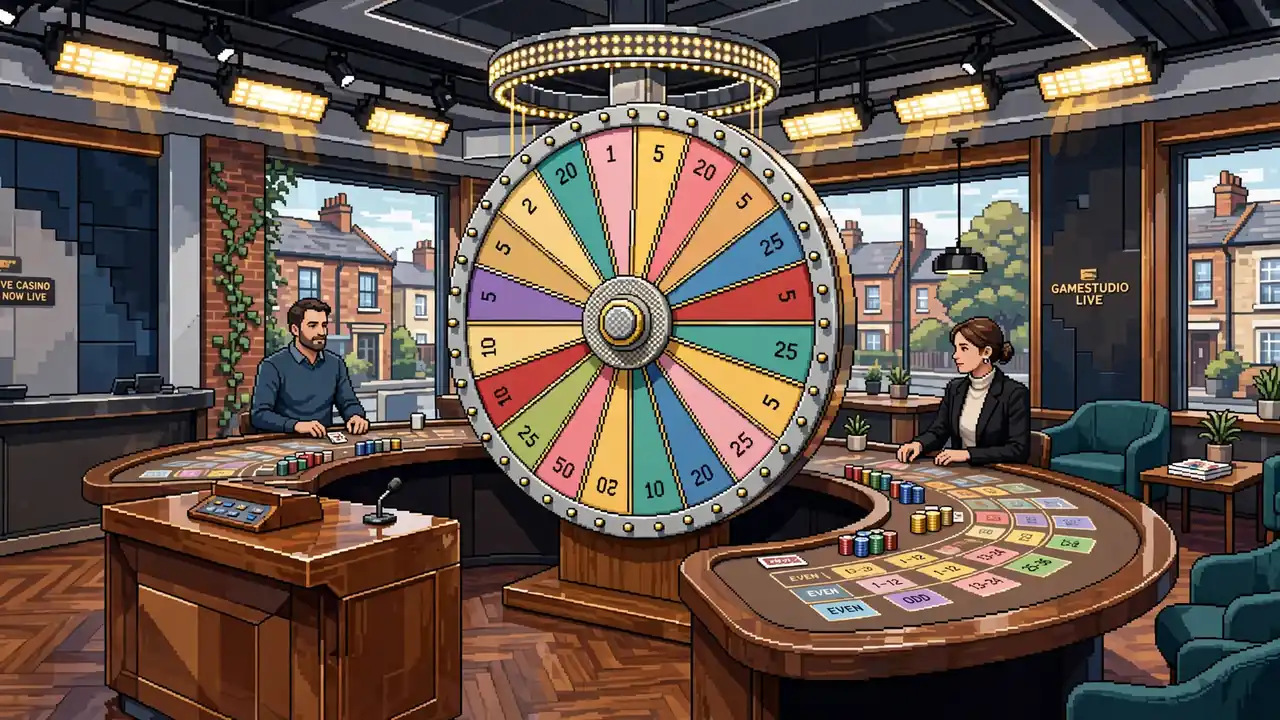
The wheel is central to how Dream Catcher is commonly described, but its presence in the product name does not establish the details of its design. A careful account can identify the wheel as the feature associated with the game without presenting an unverified description of how it is arranged or operated.
Several details require particular caution:
- the number and order of segments;
- the symbols, labels or values displayed on those segments;
- whether some segments occur more often than others;
- the method by which the wheel is set in motion;
- the way a result is selected;
- the relationship between a displayed segment and any resulting payout.
None of those points should be treated as established merely because a page refers to a Dream Catcher casino wheel. Terminology can identify the subject of a page, but it does not, by itself, prove the underlying mechanics.
The same distinction applies to descriptions of a live casino wheel. The word “live” may describe the setting in which a product is offered, yet it does not establish whether the wheel is physical, digitally represented, or linked to a particular studio arrangement. Nor does it demonstrate the existence of a particular presentation format across every operator that lists the game. Those are separate matters requiring direct, reliable documentation.
A responsible description therefore remains narrow. Dream Catcher can be discussed in connection with a wheel, while claims about its layout or operation should be withheld unless an authoritative game guide, clearly identified rules page or equivalent primary material supports them. Screenshots and promotional wording may show how a product is presented, but they are not automatically sufficient evidence for technical conclusions about the game’s mechanics.
This distinction matters when comparing a product page with a casino listing. A listing may confirm that a title is available under the Dream Catcher name, but it need not explain the wheel’s segments, selection process or outcome rules. Likewise, a review that repeats familiar descriptions without identifying their basis does not turn those descriptions into verified information.
The safest treatment of the Dream Catcher wheel is therefore descriptive rather than speculative: it is the feature around which the product is presented, but its precise configuration and mechanics should not be stated as fact without supporting documentation. That approach avoids confusing recognition of the game with evidence about how its wheel works.
Checking a Live Dream Catcher Casino Site
A live Dream Catcher casino site should be assessed as an operator, not merely by the presence of a game title or live-stream interface. The relevant question is whether the business is authorised to provide remote gambling to customers in Great Britain. The UK Gambling Commission regulates this activity, and operators serving the British market must hold the appropriate operating licence even when their key equipment is located elsewhere.
Verification Steps
- Search the UK Gambling Commission public register.
- Match the site’s trading name and licence number to the register.
- Confirm the domain matches the licensed business information.
- Verify age and set a financial limit before the first deposit.
The first check is the Commission’s public register. The operator’s legal name, trading name and licence number should correspond with the details displayed on the website. The licence number should be entered into the register independently rather than accepted from an advertisement or review. The domain used for account registration should also match the domain recorded for the licensed business where the register provides that information. A site that cannot establish this connection should not be treated as a legal UK casino.
A dated example illustrates why the check must be specific. A specialist review reported that a register search dated 26 September 2026 found no LuckyPays entry under that brand or its stated domain, including luckypays.io. That finding concerns LuckyPays at that date; it is not evidence about Dream Catcher sites generally, nor does it replace a current register check.
Account controls provide a second layer of verification. Before a first deposit, a UK-licensed remote operator must verify the customer’s age and prompt a new customer to set a financial limit. The account should then offer accessible controls for adjusting limits and responsible-gambling tools, including self-exclusion. Credit-card payments cannot be accepted for gambling, including funding routed through a money-service business or through a wallet that permits credit-card funds to be used for gambling.
The operator should also explain how complaints are handled. UK Gambling Commission licensees must provide an internal complaints process and access to an approved Alternative Dispute Resolution service. These details should be visible in the terms, help pages or safer-gambling information before funds are deposited. A verifiable licence, consistent domain information and usable account protections together provide a more reliable basis for evaluating a live Dream Catcher casino site than game branding alone.
Online Casino Tournaments UK: Formats and Rules
Top online casinos in the UK
- x3betBonus: Welcome Pack 100% Up to £1.000 + 200 Free Spins · Payout speed: 1-3 business days
- Revery PlayBonus: 100% up to€1,000+ 100 FS · Payout speed: 1-3 business days
- NightLuckBonus: Welcome Pack + 805% Up To 6400€ + 280 FS · Payout speed: 1-3 business days
- DieselwinBonus: Welcome Pack 250% up to £4000 + 200 FS · Payout speed: 1-3 business days
- ChanzeBonus: Slots Welcome Bonus #1 200% up to €500 · Payout speed: 1-3 business days
- SlotoSportBonus: 500% up to £ 10 200+ 777 FS · Payout speed: 1-3 business days
- EvoSpinBonus: 125% up to €2500 + 125 Free Spins · Payout speed: 1-3 business days
- AmunbetBonus: Join now and get 450% up to 2,700 GBP + 450 FS · Payout speed: 1-3 business days
- JetsetspinsBonus: 200% Bonus + 100 Free Spins + Free Royal Wheel · Payout speed: 1-3 business days
- NightWinBonus: £900 + 400 free spins · Payout speed: 1-3 business days
Demo Access and the Limits of Available Information
A demo version of Dream Catcher would allow the game to be examined without placing real-money stakes. That makes it a distinct form of access from playing through a funded gambling account. The presence of a game in an online casino does not, by itself, establish that the same product is offered in a free-play mode.
Those points should therefore remain separate from claims about the game’s availability for real-money play. A page describing a live casino lobby, for instance, does not demonstrate that a free version is offered alongside it.
The wording used by an operator also matters. “Demo”, “free play”, and similar labels can describe different arrangements. One site might display a game for practice, while another might show only promotional material, an inactive game tile, or a sign-in route leading to real-money play. Without clear terms, the label alone cannot establish the nature of access.
Registration and account requirements should not be inferred either. Some gambling sites may restrict game access until an account has been created, while other demonstrations, where offered, may be presented differently. A claim that a demo is available without registration would require confirmation from the operator’s own current interface or terms.
Dream Catcher should also not be treated as an online slot merely because it appears in a casino’s game catalogue. Consequently, rules applying to online slots should not be used to describe a supposed demo of this product.
Is a demo version always available?
Not necessarily. The availability of a free-play mode is distinct from real-money access and requires direct confirmation from the operator.
Can I use a credit card for deposits?
No. UK-licensed casinos cannot accept credit cards for gambling, nor can they accept funds routed through money-service businesses that permit credit-card funding.
The careful position is therefore limited: a free demonstration may be a separate access option, but its existence, format and entry conditions require direct confirmation. A demo should not be presented as available, risk-free practice, or equivalent to the live-money game unless those specific details have been established.
What a Dream Catcher Casino Review Can Verify
A useful Dream Catcher casino review should separate observations from assumptions. Its first task is to identify what is being reviewed: the operator, the live-casino product, or both. A casino’s presentation of Dream Catcher does not, by itself, establish who supplies the game, how it operates, or whether every description used in promotional material is accurate.
The operator-related part of a review can examine information that is publicly attributable to the business. This includes its stated trading identity, terms for account use, available customer-support channels, payment restrictions and responsible-gambling controls. A review can also explain the regulatory framework. Remote operators serving consumers in Great Britain must hold the relevant Gambling Commission operating licence, while the Commission regulates commercial gambling and issues operating licences to businesses. These are matters of legal status and account conditions, rather than features of the wheel or the live presentation.
The game-related part requires a narrower standard. It can confirm that Dream Catcher is displayed in an operator’s live-casino catalogue, record the wording used to describe it, and distinguish the product name from claims about its provider, format or mechanics. Such claims should be included only where the operator or another identifiable, authoritative source supports them. A review should not infer a game’s rules, wheel layout, return, volatility or betting conditions merely from its name or from an image.
The same principle applies to statements about availability. A listed title may be unavailable to some accounts, restricted by jurisdiction or removed without notice. Consequently, a careful review dates its observations and identifies whether they concern a live page, published terms or a general statement by the operator. It should avoid turning a temporary display into a permanent claim.
Crazy Time Live Casino Game Show in the UK
An evidence-led assessment therefore has two boundaries. It can describe what is documented and explain how the operator’s obligations affect account use. It cannot convert unverified promotional language into established information, nor present an incomplete inspection as a definitive judgement on every Dream Catcher live-casino experience.
Playing Live: Deposits, Limits and Safer Gambling
Before funds can be deposited into an account for a live casino game, the operator must verify that the customer is at least 18. Age verification is therefore part of account opening, rather than a formality that can be left until a withdrawal is requested.
Payment methods are also subject to restrictions. UK-licensed casinos cannot accept credit cards for gambling, including payments routed through a money-service business. A digital wallet cannot be used for this purpose where it permits credit-card funds to finance gambling. A deposit method being available on a banking app does not, by itself, make it acceptable for gambling transactions.
Financial controls apply at account level. New customers must be prompted to set a financial limit before making their first deposit, and the operator must provide accessible controls for changing or maintaining account limits. These tools can help separate an entertainment budget from ordinary household funds, although they do not remove the possibility of loss.
Responsible-gambling provisions should also be visible in the account area. UK Gambling Commission licensees must offer self-exclusion and other responsible-gambling tools. Where gambling becomes difficult to control, GAMSTOP provides a route to self-exclusion across participating online gambling businesses, while GamCare, BeGambleAware and Gamblers Anonymous offer sources of support.
The slot rules should not be transferred automatically to Dream Catcher unless the game has first been established as an online slot. A specialist review has stated that the Great Britain slot limit is £2 per game cycle for adults aged 18 to 24 and £5 for those aged 25 and over; the same review states that these limits do not apply to roulette or blackjack. The classification therefore matters. In every case, gambling should be limited to money that can be afforded to lose.
Are online casino games licensed and regulated?
Yes. The UK Gambling Commission regulates online casinos and remote gambling offered to consumers in Great Britain, and the operator must hold the relevant licence.
Is LuckyPays licensed by the UK Gambling Commission?
The Commission’s public register dated 26 September 2026 has no entry for LuckyPays under its brand or stated domain, including luckypays.io.
What are the online slot stake limits in Great Britain?
The limit is £5 per game cycle for adults aged 25 and over, and £2 for adults aged 18 to 24. These limits do not apply to roulette or blackjack.